
Why collectors love limited edition portrait prints
Introduction to limited edition portrait prints
Art collecting has evolved significantly in recent years, moving away from traditional galleries and elite circles toward a more accessible and personal experience, where individuals are not just buying art as an investment, but as a reflection of identity, taste, and lifestyle.
In this shift, limited edition portrait prints have become increasingly popular, especially among modern collectors who value both exclusivity and emotional connection, because these works offer something unique that mass-produced prints simply cannot provide.
They are not just images.
They are owned moments.
A limited edition print carries a sense of rarity, intention, and authorship, where each piece is part of a defined series, and once that series is sold out, no more will ever be produced.
This creates a natural sense of urgency, but also long-term value.
For collectors, this balance between accessibility and exclusivity is incredibly appealing, because it allows them to own high-quality fine art without entering the price range of original paintings, while still maintaining a level of scarcity that gives the artwork meaning beyond decoration.
And when combined with expressive portrait art, the result is something even stronger.
Because now, the collector is not just buying a limited object.
They are buying a presence.
Exclusivity and scarcity create real value
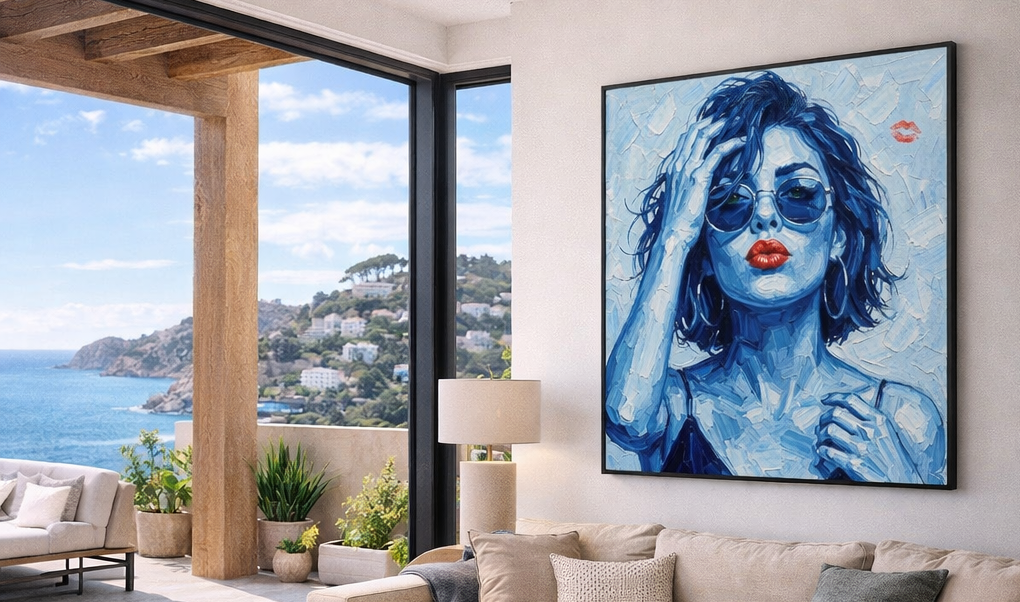
One of the primary reasons collectors are drawn to limited edition portrait prints is the concept of scarcity, which plays a central role in how value is perceived, both emotionally and financially.
When an artwork is part of a limited edition, it immediately separates itself from mass-produced prints, because there is a clear boundary to how many exist, and this boundary creates a sense of importance that cannot be replicated through unlimited production.
Knowing that only 20 or 30 people in the world will own the same piece changes how the artwork is experienced, because it no longer feels replaceable.
It feels chosen.
This exclusivity is reinforced through numbering, where each print is marked as part of a specific edition, such as 1/20 or 15/30, giving the collector a tangible connection to the series as a whole, while also establishing authenticity and traceability.
Over time, as editions sell out, this scarcity becomes even more significant, because availability decreases while demand may continue to grow, especially if the artist gains recognition or the series becomes sought after.
For collectors, this creates both emotional satisfaction and potential long-term value, making limited edition prints a compelling entry point into the art market.
Not just as decoration.
But as something that holds weight.
This value is clearly present in the Blue Series, where each piece is part of a defined edition.
The emotional connection of portrait art
While scarcity plays a crucial role in value, it is the emotional connection that ultimately drives collectors to choose one artwork over another, and this is where portrait art becomes especially powerful, because it introduces a human element that immediately engages the viewer.
Unlike abstract compositions, which can sometimes feel distant or purely aesthetic, portraits create a sense of presence, even when the subject is stylized or not based on a real person, because the human face carries a natural ability to engage the viewer on a subconscious level.
This connection is often subconscious.
A glance.
An expression.
A feeling that is difficult to define but impossible to ignore.
In expressive portrait art, this effect is amplified, because the artwork does not aim for perfect realism, but instead focuses on mood, color, and gesture, allowing the viewer to project their own emotions and experiences onto the image.
This makes each piece feel personal.
Almost intimate.
And for collectors, this emotional resonance is often more important than technical perfection, because it creates a lasting relationship with the artwork, where the piece continues to reveal new layers over time.
It becomes something you live with.
Not just something you look at.
Quality materials and fine art printing matter

For collectors, the quality of the artwork is just as important as its concept, because the physical presence of the piece must match the emotional and visual impact it promises, and this is where fine art printing techniques and materials play a critical role.
High-quality limited edition prints are typically produced using archival inks and premium papers, such as Hahnemühle, which are specifically designed to preserve color depth, detail, and longevity over time.
This ensures that the artwork does not fade, degrade, or lose its visual integrity, even after many years of display.
The texture of the paper also contributes significantly to the experience, as it adds a tactile dimension that enhances the perception of brushstrokes and tonal variation, making the print feel closer to an original artwork rather than a flat reproduction.
For collectors, this distinction is essential.
It is what separates fine art from decorative print.
When combined with proper handling, framing, and presentation, these materials elevate the artwork into something that feels substantial, intentional, and worthy of long-term ownership.
Because in the end, a collector is not just buying an image.
They are buying an object.
And that object must hold its value.
The importance of signing, numbering, and coa
Authenticity is a key factor in art collecting, and limited edition portrait prints address this through a combination of signing, numbering, and certificates of authenticity, which together create a clear and verifiable connection between the artist and the collector.
Each print being signed by the artist adds a personal element, reinforcing the idea that the piece is not mass-produced, but part of a controlled and intentional release.
The numbering system further defines the edition, giving each collector a specific place within the series, and often increasing the perceived value of lower numbers, which are sometimes seen as more desirable.
The certificate of authenticity, or COA, acts as formal documentation, confirming the legitimacy of the artwork and providing details about the edition, materials, and production process.
For collectors, these elements are not just formalities.
They are essential components of trust and value.
They ensure that the artwork can be verified, resold, or passed on with confidence, maintaining its integrity over time.
Understanding how the artwork is created adds depth, as shown in the process behind the Blue Series.
Limited editions as an accessible entry to art collecting
One of the reasons limited edition portrait prints have grown in popularity is their ability to bridge the gap between accessibility and exclusivity, offering collectors a way to enter the art market without the financial barrier of original works, while still owning something that carries meaning, rarity, and value.
Original paintings can often be priced out of reach for many buyers, especially as artists gain recognition, but limited editions provide an alternative that maintains a connection to the artist’s work, while allowing for a broader audience to participate.
This accessibility does not diminish value.
It expands it.
Because it allows more people to engage with art in a meaningful way, rather than treating it as something reserved for a select few.
At the same time, the limited nature of the editions ensures that this accessibility does not lead to oversaturation, preserving the sense of exclusivity that collectors seek.
It is a balance.
And when executed correctly, it creates a system where both artist and collector benefit.
Explore the blue series
The Blue Series is designed with collectors in mind, offering a cohesive body of expressive portrait artworks that combine emotional depth with strong visual identity, making each piece suitable as both a standalone statement and part of a larger collection.
Each artwork is developed within a consistent color language, allowing collectors to build a unified aesthetic across multiple spaces, or to select a single piece that defines a room with clarity and presence.
The focus is not on quantity.
But on intention.
Beyond collecting, these works also function as statement art in interiors.
Available as limited edition fine art prints
The Blue Series is available as limited edition fine art prints in carefully controlled editions, ensuring both quality and exclusivity.
Sizes include 40×40 cm (edition of 1/30), 80×80 cm (edition of 1/20), and 120×120 cm (edition of 1/10), providing options that suit different spaces while maintaining scarcity.
Each print is produced on Hahnemühle fine art paper using archival inks, ensuring long-lasting color and detail.
All artworks are signed and numbered, and include a certificate of authenticity.
Selected pieces may also feature hand-finished details, adding a unique element to each print.
The importance of scarcity is explained further in limited edition prints and market value, where rarity drives long-term demand.
Closing thoughts
Limited edition portrait prints offer a unique combination of accessibility, exclusivity, and emotional connection, making them an increasingly attractive choice for modern collectors who want more than just decoration.
They want meaning.
They want presence.
And most importantly, they want something that feels chosen.